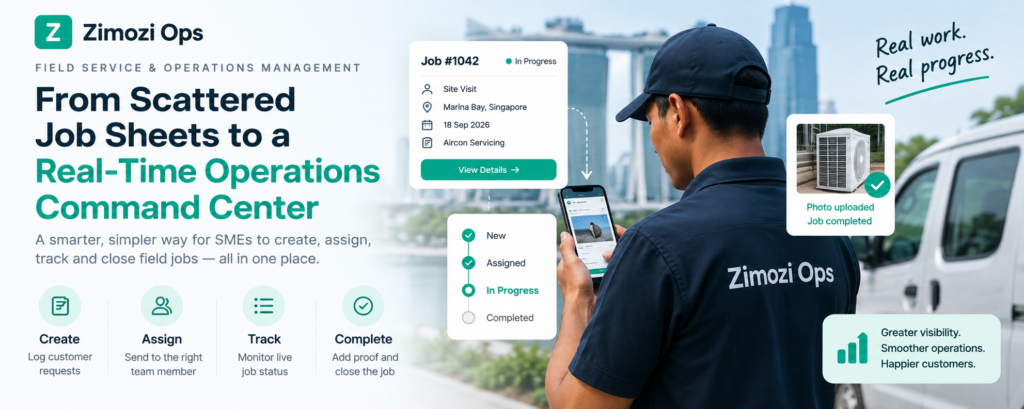
Field operations management (often called Field Service Management or FSM) is the discipline of matching incoming work orders to qualified field technicians, tracking real-time status across territories, and securing verifiable proof of completion.
What Field Operations Management Actually Means
Stripped of industry jargon, field operations management is the discipline of matching incoming service requests to qualified field personnel, tracking execution in real time, and capturing verifiable proof of completion. For more info, see our Field Operations Management guide.
- Shared spreadsheets updated at the end of the day
- Messaging groups flooded with ad-hoc dispatch requests
- Paper job sheets tucked into vehicle clipboards
- Coordinators relying on personal memory to monitor technicians
These habits do not fail loudly with a single collapse. They fail quietly through missed follow-ups, delayed billings, duplicate dispatches, and lost customer confidence.
Key Symptoms of a Field Dispatch Bottleneck
Informal communication tools stop working when request volume outpaces human memory. Recognizing operational strain early prevents customer churn.
- Blind Job Tracking: Customer support cannot provide real-time job progress without calling field personnel directly.
- Redundant Travel: Multiple technicians arrive at the same site, or emergency tickets are assigned to staff working across town.
- Unverified Completions: Jobs are verbally marked as finished without photos, signatures, or checklists, forcing managers to reopen tickets later.
- Invisible Slippage: Overdue tasks sit unnoticed because manual systems lack automated escalation alerts.
- End-of-Month Reconciliation Friction: Reporting and payroll require assembling fragmented paper logs, chat histories, and vehicle receipts.
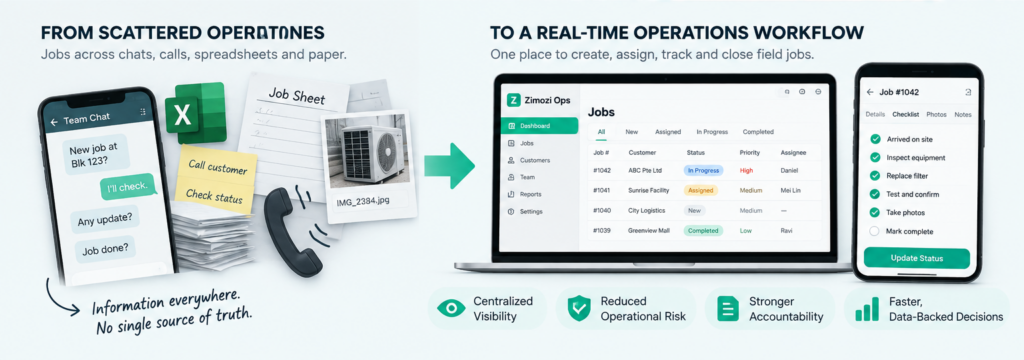
Manual Coordination vs. Digital Field Operations Management Workflow
- Intake: Phone calls or paper notes vs. Captured once in a unified job queue.
- Dispatch and Routing: Broadcast to group chat vs. Assigned directly based on skill, location, and capacity.
- Status Monitoring: Tracked inside individual technician’s head vs. Live status stages (New, Assigned, In Progress, Completed).
- Proof of Work: Verbal confirmation vs. Mandatory digital checklists, site photos, and sign-offs.
- Performance Reporting: Reconstructed manually at month-end vs. Real-time dashboards showing completed jobs and technician workloads.
The 5 Stages of a Scalable Field Operations Management Workflow
Modern field operations management follows five foundational stages to ensure consistency across plumbing, HVAC maintenance, electrical engineering, and logistics:
- Capture: The service request is recorded once into a central hub with customer history, service level expectations, and exact location details.
- Structure: The ticket receives a defined scope, including priority status, required tools, and a standard operating procedure (SOP) checklist.
- Dispatch & Territory Routing: Dispatchers route tasks based on real-time GPS availability, required certifications, territory rules, and route efficiency—ensuring emergency calls do not cause cross-town or cross-zone delays.
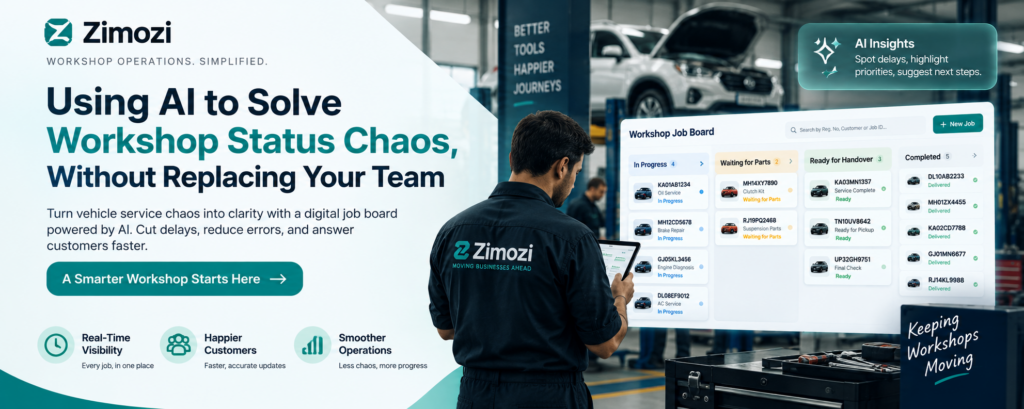
- Track: Status updates progress automatically across a Kanban board, surfacing overdue jobs instantly without manual supervision.
- Verify & Comply: Before closing a ticket, technicians submit timestamped photo evidence, client signatures, and mandatory compliance checklists that satisfy workplace safety benchmarks like OSHA standards and regional audit requirements.
How Zimozi Ops Unlocks Field Visibility
- Clear Kanban Job Queues: Organize workloads across five transparent stages: New, Assigned, In Progress, Completed, and Closed.
- Automated Overdue Escalation: System alerts flag stuck or slipping service tickets automatically so managers can intervene proactively.
- Mandatory Digital Proof of Work: Field personnel attach photos and completed checklists before a ticket can close, guaranteeing full operational accountability.
- Live Operational Analytics: Review technician capacity, resolution speed, and recurring service trends without manual data entry.
- Territory & Skill-Based Assignment: Group technicians by region, shift, or specialized trade certifications to avoid mismatched dispatches.
- Reliable Offline-First Sync: Field crews can view work orders and capture digital signatures even in remote or low-connectivity zones, automatically syncing once back online.
Practical Steps to Modernize Field Operations Management
- Centralize Job Intake: Stop accepting service requests across private messages. Direct all new requests into one dashboard so nothing falls through the cracks.
- Pilot One Workflow: Select a single recurring service (such as routine preventative inspections) to require photo evidence and digital checklists.
- Automate Chasing: Shift from manual technician follow-ups to automated status tracking and overdue notifications.
Frequently Asked Questions (FAQ)
What is field operations management software?
Field operations management software is a centralized platform designed to track, schedule, dispatch, and document off-site service operations. It replaces paper job sheets, phone calls, and group chats with real-time job boards, automated task routing, and digital proof-of-work documentation.
Why do group messaging apps fail for field technician dispatching?
Group messaging apps lack structured status tracking, automated task assignment, and audit trails. As job volume grows, critical service instructions get buried in conversation threads, leading to missed appointments, duplicate dispatches, and unrecorded work history.
What is the difference between manual dispatching and automated field operations management?
Manual dispatching relies on whiteboards, phone calls, and spreadsheets, which require continuous supervisor oversight. Automated field management systems assign jobs based on technician availability, track ticket progress across predefined workflows, and flag overdue issues automatically.
How does digital proof of work improve field service operations?
Digital proof of work requires technicians to upload on-site photographs, customer signatures, and completion checklists directly into the job ticket. This eliminates billing disputes, guarantees compliance with service level agreements, and prevents jobs from being marked complete prematurely.
Can small service teams transition to field management tools without downtime?
Yes. Most growing service businesses adopt digital workflows incrementally by digitizing the customer intake queue first, followed by assigning a single routine service line to structured digital checklists before rolling it out company-wide.
Learn more about custom engineering: Zimozi Solutions