Design studios frequently find themselves trapped in messy revision cycles where client feedback is scattered across multiple platforms. A client emails asking which asset is current, while the designer scrolls through a forty-message inbox thread filled with file attachments like "logo_v3_FINAL_v2_reallyfinal.ai". Feedback arrives via WhatsApp voice notes or Slack messages, design files sit in disconnected cloud folders, and no clear record confirms whether round three or round four was officially approved. When final invoices are issued, clients sometimes claim they never signed off on the delivered assets, leaving the studio with no formal paper trail to defend their billing.
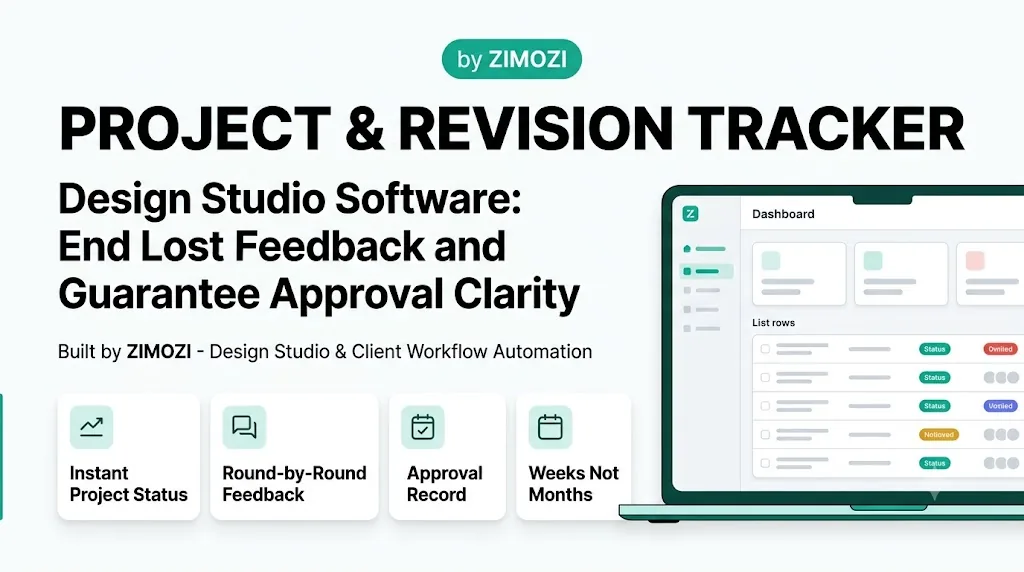
The Project and Revision Tracker developed by Zimozi provides a centralized web platform designed specifically for boutique creative studios, brand agencies, and UI/UX consultancies worldwide. By anchoring every revision round, stakeholder comment, and dated client sign-off to a unified project timeline, it eliminates version ambiguity, international communication misalignment, and unpaid scope creep.
Why Design Revisions Break Down in Email and Chat Threads
Managing creative deliverables through email chains and instant messages works for a single small project with one round of light tweaks. When handling multi-round, multi-stakeholder design projects—such as global brand refreshes, packaging suites, and website launches across distributed client teams and multiple time zones—informal communication creates expensive operational breakdowns:
- Costly production errors: Without an authoritative record, team members guess which file is the true final version, resulting in unapproved assets being sent to commercial printers or live web production.
- Contradictory client feedback: Different stakeholders across departments or regional offices submit conflicting requests in separate email threads, leaving designers unsure which instructions the studio actually agreed to execute.
- Uncontrolled scope creep: Clients continually request “just one more small change” because there is no automated counter tracking rounds against the quoted allowance, quietly eroding studio profit margins.
- Vulnerability during billing disputes: Without timestamped approval logs, domestic and international clients can dispute milestone payments or final invoices by claiming they never authorized the shipped design.
- Untraceable design histories: Understanding what changed between earlier iterations requires manually combing through weeks of asynchronous chat logs and email chains.
- Management bottlenecks: Studio founders, creative directors, and account managers waste billable hours chasing clients across time zones for simple sign-offs on open deliverables.
This operational drag affects independent agencies across the globe. Thousands of specialized design firms—spanning brand identity, packaging, UI/UX, and marketing collateral—compete in an increasingly borderless market. For boutique teams collaborating with distributed clients, relying on messy inbox threads introduces severe administrative overhead and financial exposure.
Core Capabilities of the Project and Revision Tracker
The platform provides a desktop-first workflow that mirrors how designers and account managers work at their desks with design files open:
| Core Operational Feature | Studio Workflow Impact |
| Project and Allowance Setup | Defines project parameters, deliverables, start dates, and quoted revision round limits under clear lifecycle stages from Briefed to Delivered. |
| Dated Revision Round Logging | Captures each revision round as a formal submission linked to specific deliverable versions and feedback threads. |
| Comment Resolution Tracking | Keeps stakeholder feedback organized and tracks whether individual change requests have been resolved or remain active. |
| Dated Deliverable Approvals | Records definitive, timestamped client approvals per deliverable for every round, establishing an indisputable audit trail across time zones. |
| Approval Bottleneck Dashboard | Highlights all outstanding client approvals and shows how long each decision has been pending to clarify project ownership and unblock milestones. |
The Daily Operational Workflow for Creative Studios
The Project and Revision Tracker transforms client collaboration from an informal exchange into a structured operating procedure:
- Establish the Project and Scope Limits: The designer or account manager logs client details, target deliverables, milestone dates, and the contracted revision round allowance.
- Submit Formal Revision Rounds: Once initial proofs are ready, staff submit round one with linked deliverable references, initiating an organized review cycle.
- Consolidate Stakeholder Feedback: Client comments and requested adjustments are compiled into a unified round thread, preventing conflicting edits between different client team members.
- Resolve Changes and Count Rounds: As designers implement edits, each item is marked resolved, and the submission counter automatically tallies the round against the contracted quote limit.
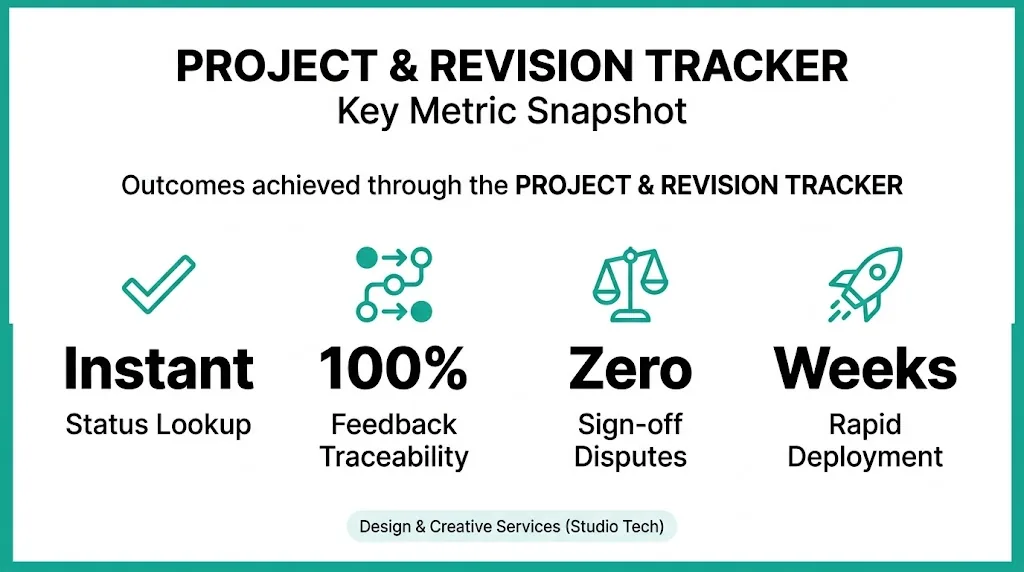
- Secure Timestamped Approvals: When a milestone satisfies the brief, client sign-off is logged directly against that version, creating a permanent, dated approval entry.
- Identify Project Bottlenecks Instantly: Studio managers view the central dashboard to confirm immediately whether a delayed project is waiting on studio execution or client feedback.
- Answer Client Queries in Seconds: When a client inquires about their project status, staff open the unified timeline to identify the latest approved version in under thirty seconds.
Why Focused Revision Tracking Beats Heavy Creative Management Suites
Many boutique creative agencies with 2 to 15 team members avoid heavy enterprise software because full-scale project management suites are expensive, require weeks of administrative onboarding, and burden creatives with unnecessary complexity.
The Project and Revision Tracker uses a lightweight, focused architecture. To ensure immediate adoption for fast-moving teams, complex and extraneous modules are intentionally excluded:
- No in-canvas pixel markup or complicated drawing tools.
- No raw artwork hosting, heavy cloud file storage, or asset rendering engines.
- No legally binding e-signature layers or complex contract management.
- No native mobile applications, keeping the tool optimized for desktop workstation use.
- No integrated invoicing, time-tracking ledgers, or payment gateways.
By focusing strictly on revision rounds, comment resolution, round allowance tracking, and dated deliverable sign-offs, the platform gives independent design agencies an agile operating system they can deploy immediately with clients anywhere in the world.
Frequently Asked Questions (FAQ)
What is the Project and Revision Tracker?
The Project and Revision Tracker is a desktop-first web application developed by Zimozi that provides design studios and creative agencies worldwide with a single timeline to track project stages, revision rounds, client comments, and dated deliverable approvals.
How does the tool prevent unpaid scope creep in design projects?
The application monitors each submitted revision round against the client’s quoted allowance, ensuring that additional change requests beyond the contracted limit are highlighted before extra work is performed.
Why is organizing client approvals on a single timeline better than email threads?
Email chains scatter feedback across multiple messages, attachments, and time zones, making it difficult to verify the latest signed-off asset. A single timeline establishes a clear, timestamped record of approvals per deliverable, preventing billing disputes and production errors.
Who is this revision tracking software designed for?
The platform is built for boutique design studios, branding consultancies, packaging specialists, pitch-deck creators, and web/UI design agencies with 2 to 15 team members handling multi-round client deliverables.
Does the application store large raw design files or include in-canvas proofing tools?
No. The platform functions as an operational timeline and approval tracking system, deliberately excluding heavy file hosting, raw artwork version storage, and canvas annotation tools to keep the software fast, intuitive, and straightforward to run.