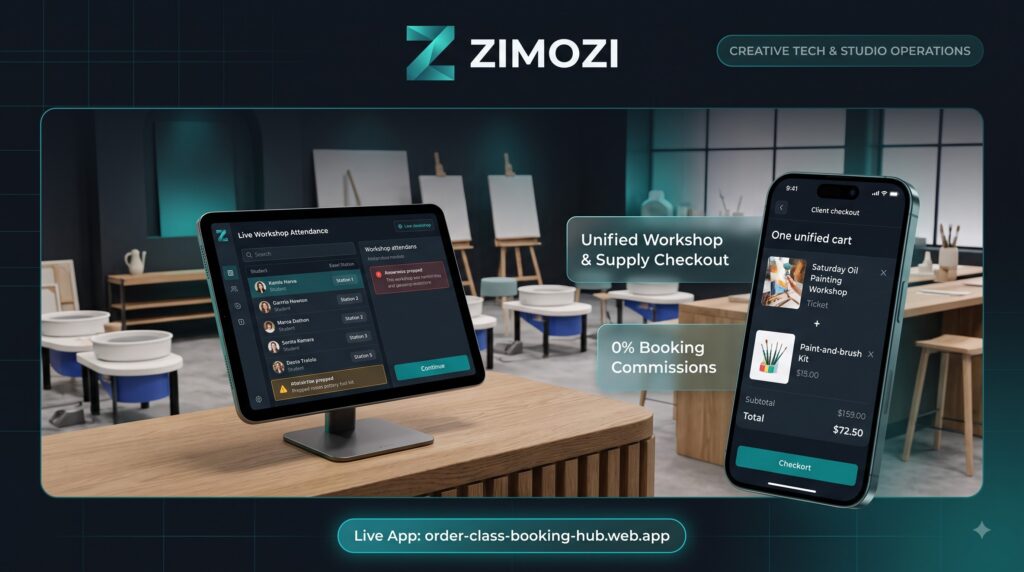
Yet behind the studio easel, operations often run on disjointed software tools. Workshop dates are buried in generic scheduling widgets, walk-in material purchases are swiped on an isolated retail card reader, and attendee lists are tracked across messy clipboards or WhatsApp chats
The result? Overcrowded tables, easel allocation mix-ups, checkout logjams before sessions, supply discrepancies, and third-party SaaS platforms taking a percentage cut off every seat sold
Deploying tailored, custom studio booking software solves this fragmentation by integrating workshop seat reservations, materials fulfillment, and instructor assignment into a single, high-retention platform
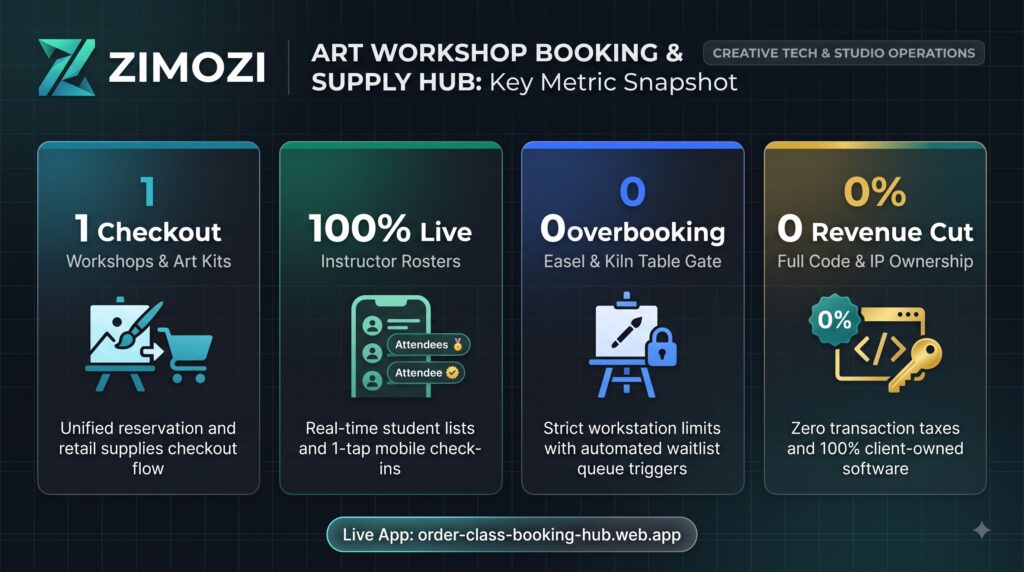
Key Metric Snapshot:
The Breakdown: Where Art Studio Margins Leak
- Seat and Equipment Overbooking: Art classes require physical infrastructure like easels, ceramic wheels, and drying racks. Generic booking calendars lack asset constraints, creating double-booked stations while late cancellations leave empty spots that waitlisted artists could have filled
- Separated Workshop Booking and Material Sales: Students booking a ceramic or oil-painting class often need canvases, aprons, sketchpads, or framing add-ons. When retail POS and seat bookings are isolated, front-desk staff juggle multiple payment steps, leading to reception delays and abandoned material purchases
- Instructor Communication Gaps: Resident artists and craft teachers rarely know who has arrived, which participants require specialized materials, or who has outstanding payments, relying instead on texted lists from management
- The Third-Party SaaS Commission Tax: Popular marketplace reservation apps take monthly platform fees plus a 1 to 5 percent cut off every workshop ticket and craft kit sold.
5 Ways Zimozi’s Hub Eliminates Creative Studio Friction
1. Granular Role-Based Access Control (RBAC) Built for Art Hubs
To secure financial figures while giving workshop teachers practical daily controls, Zimozi provides distinct operational environments
- Studio Owner / Admin Desk: Complete management over workshop revenue, multi-medium calendar creation, easel and wheel capacity, merchandise and supply inventory, and order fulfillment queues
- Instructor / Artist Console: Mobile-first dashboard displaying daily rosters, assigned tables, attendee experience levels, special material requirements, and real-time check-in toggles
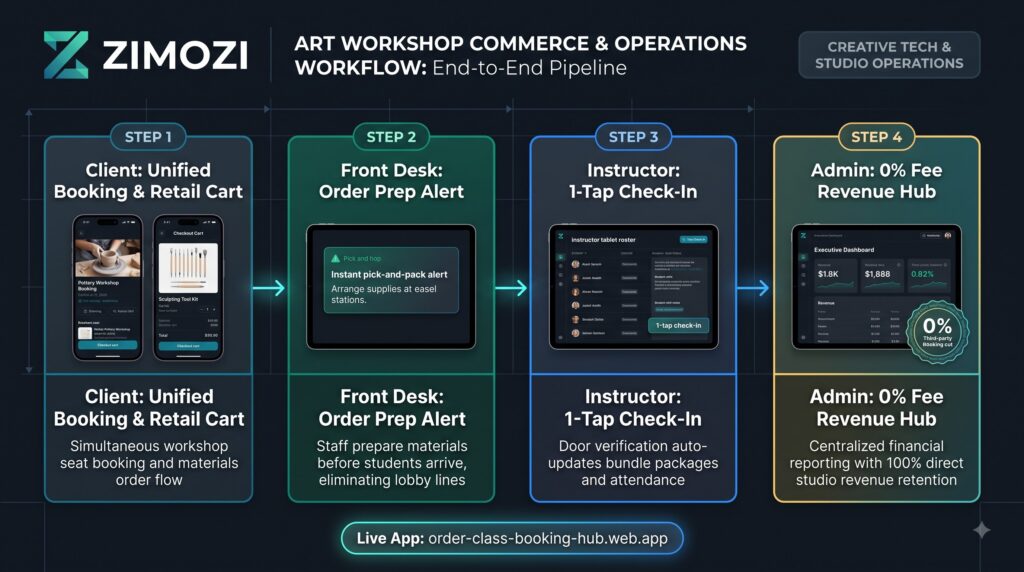
2. Unified Workshop Seat and Art Supply Cart
Students reserve workshop seats and add painting palettes, ceramic carving sets, or protective smocks into a single checkout flow Studio staff receive instant pick-and-pack alerts to prepare supply trays at the assigned easel before students arrive, eliminating lobby lines.
3. Real-Time Seat Limits and Automated Waitlist Engine
The platform enforces strict per-session station limits based on room size or specialty equipment availability When an attendee cancels, automated waitlist notifications alert waiting students immediately, protecting class fill rates and supply revenue.
4. 1-Tap Mobile Check-In at the Studio Door
Instructors check in attendees with a single tap on a mobile tablet as students enter the room Check-ins instantly update multi-session punch cards and bundle packages, avoiding credit disputes and preventing unpaid drop-ins
5. Studio Analytics with Zero Third-Party Commission Cuts
Studio directors monitor revenue trends across beginner courses, private pottery events, and craft supply sales without surrendering transaction percentages to intermediary aggregators
Traditional Studio Tools vs. Zimozi Custom Art Platform
| Operational Vector | Legacy Fragmented Practice | Zimozi Custom Art Booking & Order Hub |
| Workshop & Supply Sales | Separate booking widget plus disconnected retail register | Unified Pipeline: Reserve workshop seats and order art kits in one checkout[cite: 7] |
| Instructor Roster Access | Paper attendance sheets and texted roster screenshots[cite: 7] | Dedicated mobile console with attendee skill notes, supply needs, and check-ins[cite: 7] |
| Capacity Management | Manual headcounts prone to easel or pottery wheel collisions[cite: 7] | Automated equipment and seating caps with live waitlist management[cite: 7] |
| Revenue Tracking | Time-consuming manual tallying of separate card readers and class fees | Centralized financial metrics covering workshops, party bookings, and physical goods |
| Platform Cost & Commissions | Expensive monthly fees plus a 1 to 5 percent cut on every reservation[cite: 7] | 100% Client-Owned software with zero booking cuts and zero per-seat fees[cite: 7] |
Frequently Asked Questions
What is custom studio booking software?
Custom studio booking software is a dedicated scheduling and retail platform engineered specifically for creative spaces, including pottery workshops, painting studios, and craft academies.
How does a unified checkout increase art studio sales?
Students often want to purchase take-home canvases, sculpting tools, or premium acrylic kits when booking via custom studio booking software.
Why should craft academies avoid marketplace booking software?
Mainstream booking aggregators charge recurring subscription fees while claiming a percentage cut of every ticket and product sold. Our custom studio booking software built by Zimozi gives the studio complete ownership over customer data and source code, eliminating recurring commission fees so the studio retains all workshop margins.
Build Your Art Studio Platform with Zimozi
Creative studios thrive on memorable, hands-on learning experiences without operational bottlenecks. Zimozi engineers custom web applications that streamline workshop scheduling, automate supply order prep, and protect business margins
👉 Test the live application: order-class-booking-hub.web.app
🚀 Learn more about custom engineering: Zimozi Solutions