For modern production teams, knowing how event planners streamline bookings and master complex vendor logistics is essential for delivering flawless gatherings. Across international corporate summits, multi-day festivals, and high-end weddings, coordinating high-stakes production requires absolute precision. Yet many independent coordinators and growing agencies still manage concurrent projects across scattered email threads, messaging apps, and disconnected spreadsheets.
When an inbound lead arrives, staff record details in one place. Once secured, venue commitments, budgets, and milestone schedules move to another file, while supplier updates remain trapped in separate chat apps.
When a client requests a sudden availability check or an on-site coordinator needs to confirm outstanding supplier contracts for an upcoming weekend, no single source of truth exists. Digging through cluttered inboxes and cross-checking outdated sheets introduces costly blind spots.
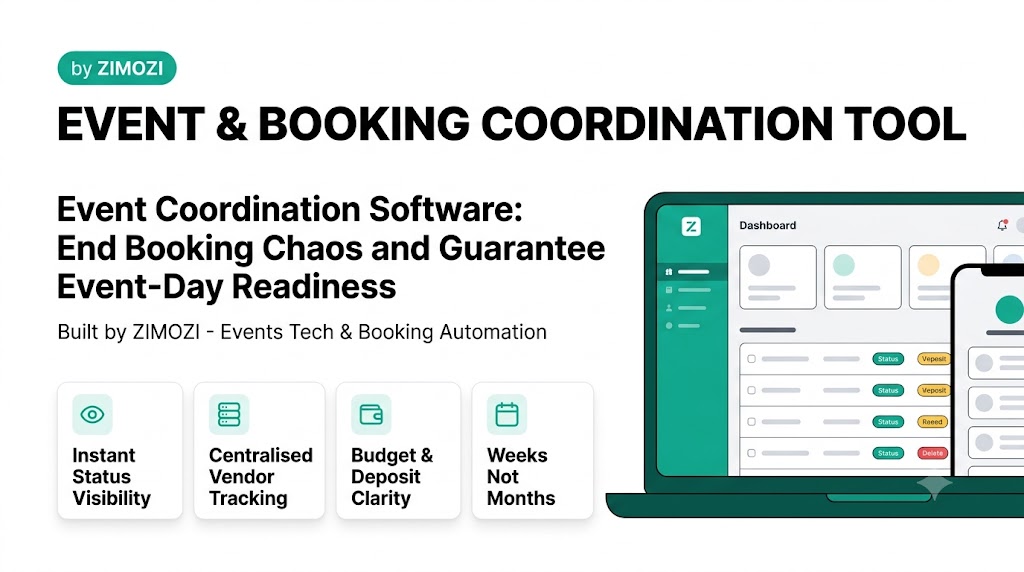
The Event and Booking Coordination Tool by Zimozi provides a centralized operational platform tailored for growing event production agencies. By connecting inquiry tracking, booking conversion, budget monitoring, vendor status verification, and event-day run sheets, it eliminates coordination friction from initial lead to post-event teardown.
Why Event Planners Streamline Bookings Away from Spreadsheets
Managing projects across separate spreadsheets and disjointed messaging apps may work when handling one or two small gatherings. Once an agency scales to manage multiple concurrent productions, manual tracking breaks down rapidly:
- Ignored inquiries and lost leads: Inbound requests go cold because team members miss follow-up deadlines buried under cluttered inboxes.
- Unconfirmed vendor commitments: Teams assume photographers, audiovisual technicians, or caterers are locked in, only to discover agreements were discussed casually without signed confirmation.
- Delayed deposit tracking: Milestone payments and deposit schedules are tracked inconsistently, exposing agencies to cash-flow vulnerabilities and late-fee liabilities.
- Static, outdated run sheets on event day: Production crews rely on printed schedules that become inaccurate the moment a morning session overruns or deliveries are delayed.
- Redundant manual data entry: Planners waste billable hours re-entering client names, contact details, and site specs across multiple forms instead of focusing on production value.
- Zero pipeline visibility for agency leadership: Agency owners must interrupt coordinators for verbal status updates just to gauge pipeline health, budget exposure, and team bandwidth.
This administrative bottleneck is recognized across the entire industry. According to research by the Events Industry Council, structured operational systems and reliable documentation are critical for mitigating risk and managing complex multi-stakeholder projects. Without integrated workflows, agencies risk costly miscommunication and reputational damage.
Core Capabilities of the Event and Booking Coordination Tool
The platform delivers a focused workflow designed to help event planners streamline bookings across the primary lifecycle of an event without burdensome configuration:
| Operational Feature | Event Business Function |
| Inquiry Capture and Tracking | Logs prospective leads instantly, displaying clear follow-up statuses to keep inbound deals warm. |
| Confirmed Booking Conversion | Transforms qualified inquiries into active projects with locked client terms, dates, and venue parameters. |
| Budget and Deposit Schedule Log | Tracks client budgets against actual vendor commitments while highlighting upcoming deposit due dates. |
| Vendor Coordination Tracking | Displays procurement and contract stages per event so planners verify who is confirmed versus who is still pending. |
| Time-Blocked Event-Day Checklist | Delivers a live digital run sheet with site contacts, ensuring floor teams execute from real-time operational data. |
| Executive Dashboard | Provides agency leadership with a consolidated view of new inquiries, active bookings, unconfirmed suppliers, and urgent daily tasks. |
7 Best Ways Event Planners Streamline Bookings Across Daily Workflows
The Event and Booking Coordination Tool establishes an intuitive daily operational cycle for agency directors, lead planners, and on-site coordinators. Here is how modern event planners streamline bookings step by step:
- Capture Inbound Leads Instantly: Inquiries are logged directly into the system with budget expectations, tentative dates, and event parameters, eliminating scattered notes and unread emails.
- Convert Qualified Inquiries Fast: When event planners streamline bookings, transitioning an approved proposal into an active booking requires just one click, without re-entering client contact details.
- Control Budgets and Milestones: Coordinators align vendor cost estimates with the client’s approved budget and monitor deposit dates to safeguard agency cash flow.
- Execute Structured Vendor Coordination: Staff assign suppliers to specific production phases and verify contract statuses to ensure every team is locked in.
- Run the Floor with Live Checklists: On-site teams replace static documents with a synchronized, time-blocked agenda that updates deliveries and stage cues in real time.
- Centralize Communication Channels: Keeping client notes, vendor specs, and venue limitations in one record ensures every staff member operates from the same reference point.
- Maintain Agency Oversight: Agency heads start each day with a high-level dashboard view, catching unconfirmed suppliers and pending tasks before they become emergencies.
For agencies looking to expand their production capabilities, exploring dedicated custom software solutions can bridge the gap between off-the-shelf tools and complex agency requirements.
Why Focused Systems Help Event Planners Streamline Bookings Better Than Bloated Software
Many enterprise event management systems fail to gain traction within boutique agencies because they introduce excessive operational drag. Bulky enterprise suites often bundle complex ticketing portals, automated general ledgers, and intricate configurations that slow agile teams down. Following lean operational guidelines from sources like Harvard Business Review on digital tool adoption, software delivers the highest return when it targets an agency’s core pain points directly without superfluous overhead.
To truly help event planners streamline bookings, the Event and Booking Coordination Tool adopts a clean, focused architecture designed for immediate team adoption:
- No complex client-facing self-service portals.
- No payment gateway integrations (deposit deadlines are tracked for operational oversight, not processed).
- No multi-branch corporate structures or bloated analytics suites.
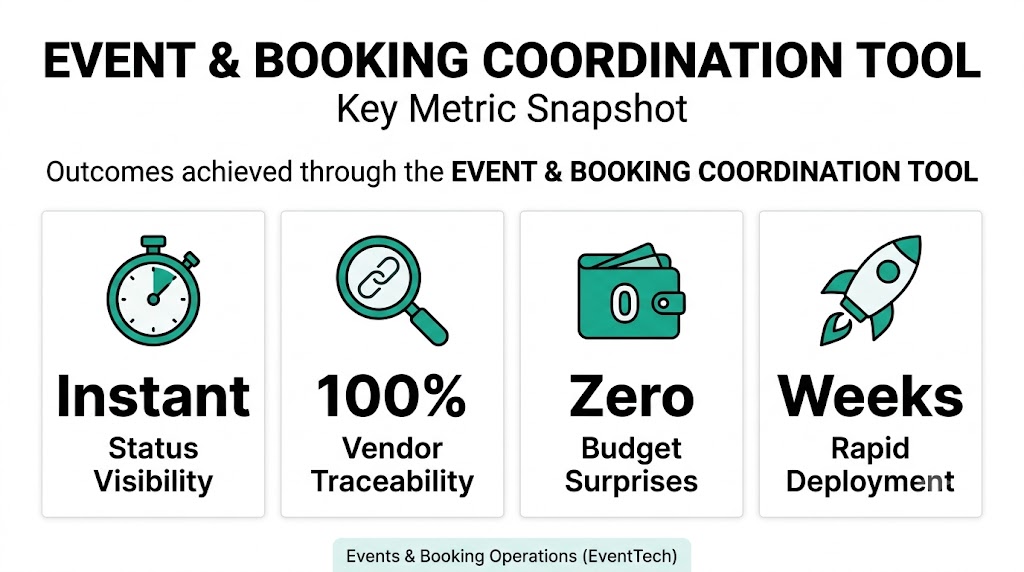
By focusing strictly on inquiry capture, booking management, vendor coordination, and live run sheets, the platform empowers coordinators to run projects efficiently from day one.
Frequently Asked Questions
What is the Event and Booking Coordination Tool?
The Event and Booking Coordination Tool is an operational platform built by Zimozi that helps event planners streamline bookings, manage client inquiries, track budgets, monitor deposit milestones, confirm vendors, and execute live event-day run sheets.
How do event planners streamline bookings and prevent missed inquiries?
To ensure event planners streamline bookings without dropping leads, the platform centralizes every prospective inquiry into a visual dashboard with automated follow-up tracking, ensuring high-value client requests never get lost in personal inboxes.
Why are printed run sheets problematic for on-site event coordination?
Printed PDF schedules become obsolete the moment a speaker schedule shifts or an equipment delivery is delayed. A digital run sheet keeps the entire production and floor team aligned on live schedule changes.
Who is this event management software designed for?
The platform is built for independent wedding planners, corporate event coordinators, venue event teams, and boutique event agencies handling multiple concurrent productions worldwide.
Does the system process online payments or client ticket sales?
No. The core system focuses purely on internal coordination and operational tracking, giving teams clear visibility over budgets and payment deadlines without payment gateway complexity.