A dedicated clinic appointment scheduler is essential for healthcare practices worldwide seeking to eliminate no-shows, streamline patient bookings, and reduce front-desk administrative fatigue. According to healthcare operational research published on PubMed, automated reminders and structured scheduling protocols significantly lower missed appointment rates while safeguarding clinical capacity. Every growing medical practice—from independent dental studios to multi-specialist outpatient centers—benefits from replacing fragmented booking systems with automated scheduling workflows.
In many outpatient clinics, appointments are still written in physical diaries or split across disconnected digital tools. This fragmented setup makes routine questions difficult to answer: who is scheduled with which practitioner today, and which patients require follow-up reminders or upcoming recalls?
The Patient and Appointment Scheduler provides a centralized operational tool designed specifically for private practices, outpatient clinics, and healthcare service providers. By integrating patient contact details, practitioner availability, automated reminders, daily master schedules, and future recall tracking into a single workspace, this clinic appointment scheduler eliminates booking conflicts and lost patient follow-ups.
Why Traditional Clinic Scheduling Fails Across Paper Books and Isolated Calendars
Paper booking diaries and disconnected digital calendars cannot sustain the continuous operational workflow that modern clinics require. Without an integrated clinic appointment scheduler, managing patient bookings manually leads to recurring administrative breakdowns:
- Practitioner double-booking risks: When schedules live in separate files or personal calendars, receptionists must cross-reference multiple views before offering an open slot, increasing the risk of scheduling errors.
- Time-consuming morning preparations: Receptionists spend valuable time at the start of each morning compiling the day’s patient roster by hand, producing paper lists that become obsolete the moment a cancellation occurs.
- Inconsistent reminder calls: Front-desk teams intend to telephone every scheduled patient, but manual call batches get skipped during peak check-in hours, leading to preventable no-shows.
- Lost patient recalls: Check-up recommendations often come due weeks or months later, long after a paper sticky note or manual ledger entry has been misplaced.
- Repetitive contact lookups: Routine confirmations force staff to search through disparate files to locate accurate phone numbers and email addresses.
- Lost clinical capacity: Unattended appointments leave practitioner time slots empty that could have otherwise gone to patients seeking prompt care.
Core Capabilities of a Modern Clinic Appointment Scheduler
Instead of forcing clinic staff to navigate bulky enterprise software, the scheduler focuses on the essential operational loop required to coordinate bookings, consultations, and patient recalls:
| Core Operational Feature | Clinic Reception Function |
| Practitioner-Specific Calendar | Organizes active appointments by individual practitioner, date, and consultation room or time slot. |
| Integrated Patient Contact Profiles | Keeps phone numbers, emails, and essential notification preferences attached directly to appointment files. |
| Direct Appointment Booking | Links patient profiles, assigned practitioners, and selected time slots into a single verified entry. |
| Automated Reminder Delivery | Transmits automated multi-channel appointment notifications at predefined intervals without staff dialing manually. |
| Patient Recall Tracking | Records recommended future return dates and triggers automated alerts so preventative care plans stay on schedule. |
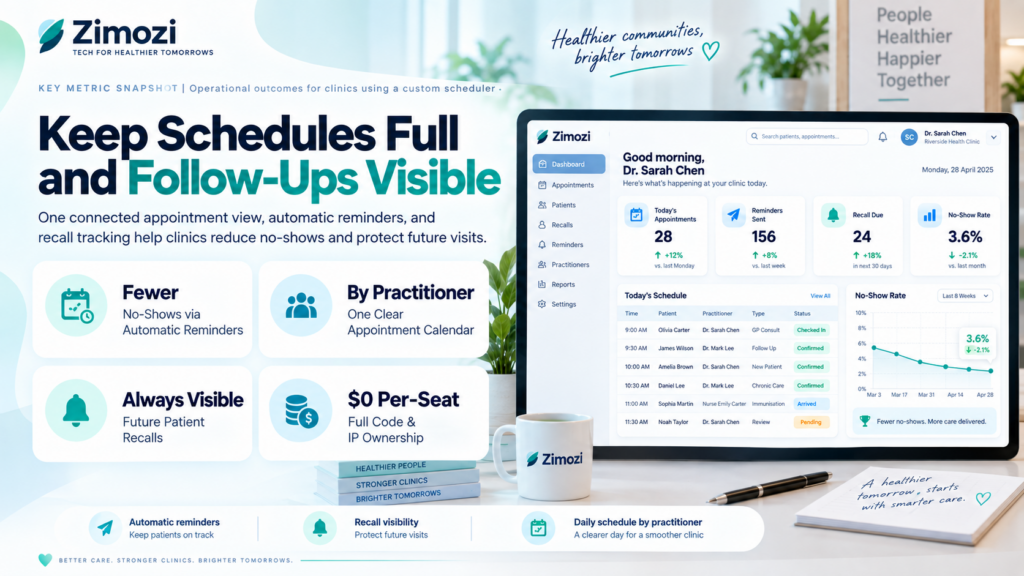
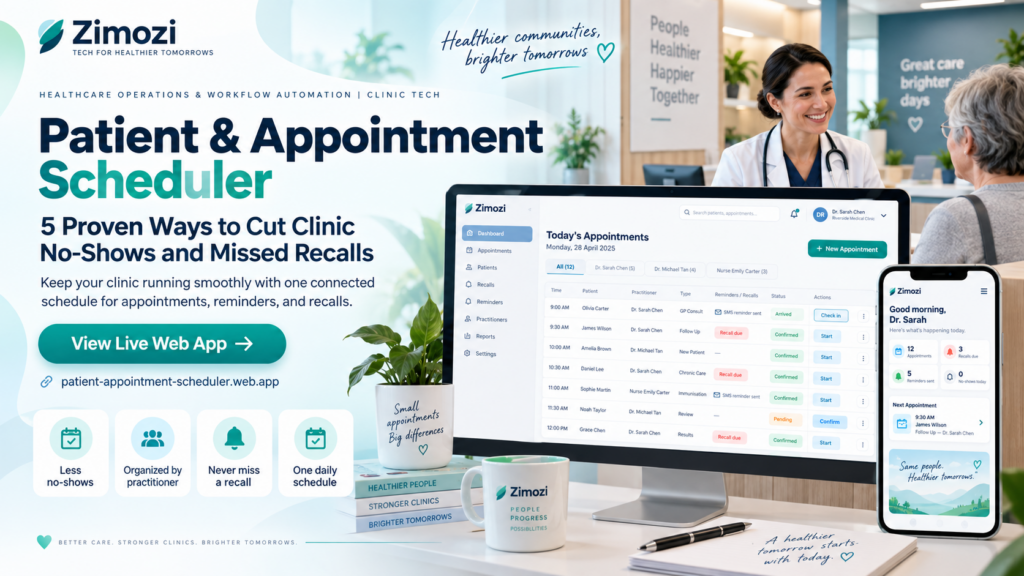
| Daily Operational Dashboard | Displays a single, unified view of the day’s appointments sorted by practitioner and consultation time. |
The Daily Operational Workflow for Clinic Reception Teams
Adopting a modern clinic appointment scheduler standardizes reception work from the initial booking inquiry through future follow-up visits:
- Locate or Add the Patient Record: Staff search the central registry or create a lightweight profile containing the essential contact details needed for reminders.
- Review Practitioner Commitments: Receptionists select the requested practitioner to view real-time availability before offering open slots to the patient.
- Lock in the Appointment: Staff confirm the agreed time, linking the booking directly to the patient’s record on the master schedule.
- Trigger Automatic Reminders: The system schedules and sends the appointment confirmation and upcoming reminder automatically based on clinic presets.
- Run the Clinic from the Daily Dashboard: Receptionists open one unified screen each morning that displays all expected patients, eliminating manual roster prep.
- Log Future Recalls: If a practitioner advises a follow-up in three or six months, staff set the recall date and reminder rule so the visit is never lost.
- Initiate Communication from One Screen: When checking booking status or following up on care plans, staff communicate directly using details linked to the patient profile.
Why Lightweight Scheduling Tools Outperform Heavy Practice Management Suites
Many independent healthcare practices avoid enterprise software because traditional hospital suites are costly, demand extensive staff onboarding, and arrive bloated with unnecessary administrative modules.
A lightweight clinic appointment scheduler concentrates strictly on the core scheduling and patient communication workflows needed every day. By focusing on booking coordination, automated reminders, and recall tracking, it gives healthcare teams a frictionless, easy-to-adopt solution that delivers immediate operational relief.
Frequently Asked Questions (FAQ)
What is the Patient and Appointment Scheduler?
It is a cloud-based operational tool developed by Zimozi that gives private medical practices, dental offices, therapy centers, and specialist clinics a unified system to manage practitioner calendars, contact records, appointments, automated reminders, and future recalls.
How does a clinic appointment scheduler reduce patient no-shows?
The scheduler automates appointment reminders according to configured notification intervals (such as 48 hours and 2 hours prior), ensuring patients receive timely alerts via SMS or email without requiring manual telephone calls from front-desk staff.
How does the system manage future patient recalls?
When a practitioner recommends that a patient return in several weeks or months, staff log the target recall date and reminder rule directly into the application, keeping long-term treatment plans visible and actionable.
Who is this clinic scheduling tool designed for?
It is built for small-to-midsize medical practices, outpatient centers, dental surgeries, physical therapy clinics, wellness centers, and specialist practices looking for a clean, reliable scheduling workflow.
Does the software handle clinical records, prescriptions, or insurance billing?
No. The core application concentrates strictly on the operational scheduling and recall workflow, deliberately omitting complex modules like electronic medical records (EMR/EHR), diagnostic coding, and complex billing to maintain a fast, user-friendly interface.